

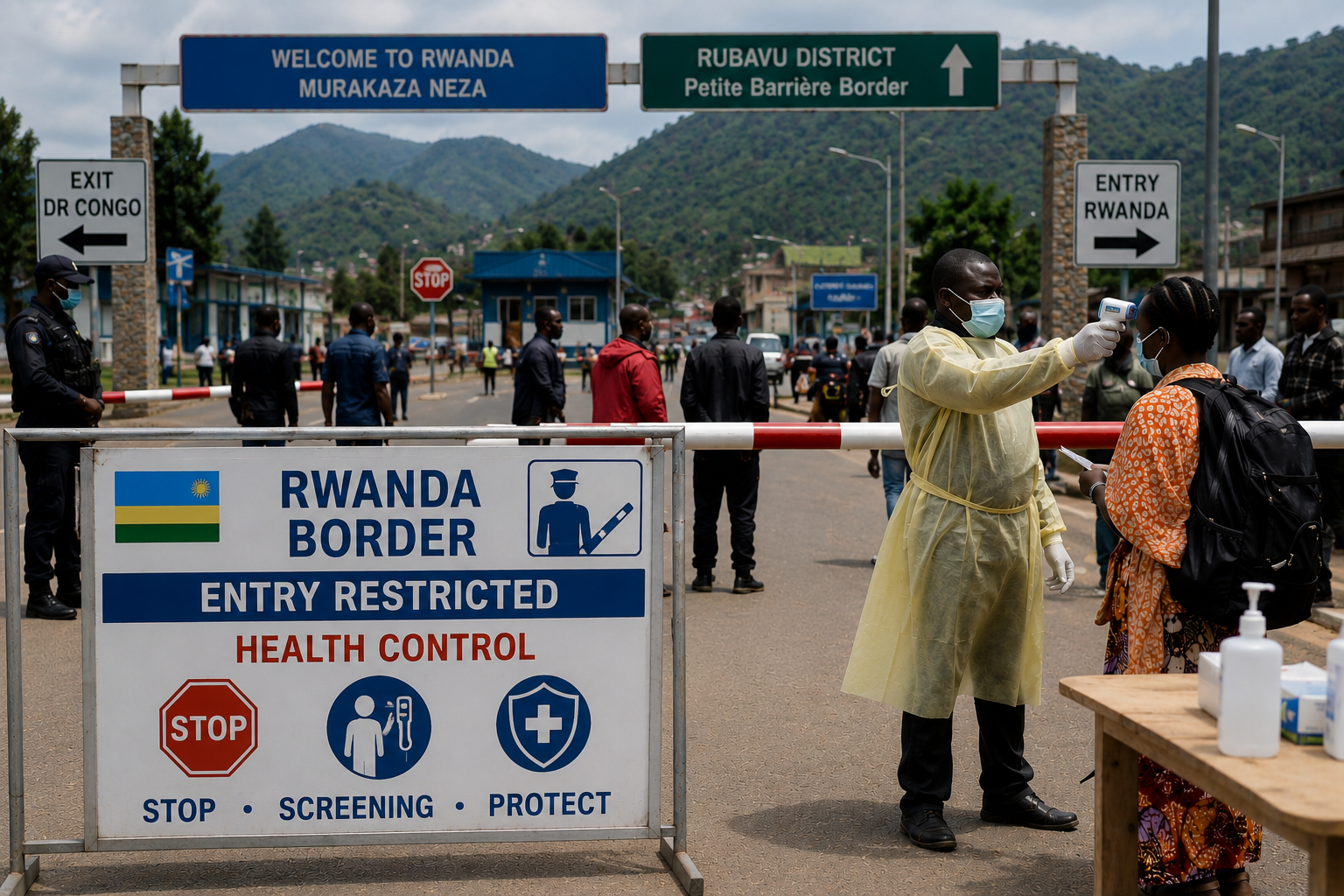
The Government of Rwanda has announced enhanced Ebola prevention measures, including tighter border screening and new travel restrictions targeting people arriving from the Democratic Republic of the Congo (DRC).
In a notice issued on May 22, 2026, Rwanda's Health ministry said there is currently no confirmed Ebola case in Rwanda but authorities are strengthening preparedness, surveillance and rapid response systems to prevent possible importation of the virus.
The ministry said health screening and vigilance measures have been reinforced at land border points with DR Congo, while additional entry control procedures have been introduced at Kigali International Airport for inbound travellers.
Under the new directives, all foreign nationals who have travelled to or transited through DR Congo within the last 30 days before intended travel to Rwanda will be denied entry effective immediately.
However, Rwandan nationals and foreign residents holding valid residency permits will still be allowed into the country but will face mandatory quarantine procedures if they recently travelled through DR Congo.
“The Ministry of Health continues to closely monitor the Ebola outbreak reported in the Democratic Republic of Congo,” the statement said.
The latest available figures from health monitoring agencies indicate that the Ebola outbreak in DR Congo has so far recorded about 51 confirmed cases and roughly 148 deaths.
More than 500 suspected infections still under investigation as surveillance continues in affected areas of eastern DR Congo, particularly in Ituri Province.
Health authorities and the World Health Organisation say the situation remains fluid, with ongoing laboratory testing and contact tracing expected to adjust the final totals as more cases are confirmed or ruled out.
WHO has declared an international emergency over the Ebola outbreak after an American doctor who treated patients in DR Congo tested positive for the haemorrhagic fever and was airlifted to Europe for medical attention.
Rwanda's Health ministry noted that it had earlier this week, together with World Health Organisation Rwanda office officials, briefed international organisations and members of the diplomatic corps on Rwanda’s preparedness measures and ongoing response plans.
Authorities emphasized that normal activities across Rwanda would continue uninterrupted despite the heightened alert.
“The Ministry emphasized that all activities within Rwanda continue as usual, including conferences, events, tourism, business, and travel within Rwanda,” the statement added.
The latest measures come amid heightened regional concern over renewed Ebola outbreaks in eastern DRC and increasing cross-border surveillance efforts by neighbouring countries.
In Uganda, authorities this week announced sweeping restrictions after a Congolese national who imported an Ebola case into the country died last week.
Following a National Task Force on Ebola Virus Disease meeting chaired by Vice President Jessica Alupo, Uganda suspended all flights to and from the DRC, halted cross-border bus transport and passenger ferry services on the Semliki River for four weeks, and banned weekly markets and large cultural gatherings in high-risk border districts.
Uganda also ordered intensified border patrols, enhanced screening and testing along the DRC frontier, and stricter enforcement of Ebola standard operating procedures in schools, markets, hotels, prisons and places of worship.
The developments underscore growing regional fears over the spread of Ebola, a highly infectious viral disease that has periodically resurfaced in eastern DRC over the past decade.
Rwanda has previously heightened border surveillance during Ebola outbreaks in neighbouring DRC because of extensive cross-border movement for trade, employment and family connections.
The Ministry of Health said it would continue coordinating with national, regional and international partners to safeguard public health and maintain preparedness.
Members of the public were encouraged to report symptoms or seek health information through the Rwanda Biomedical Centre emergency hotlines 114 and 912.
